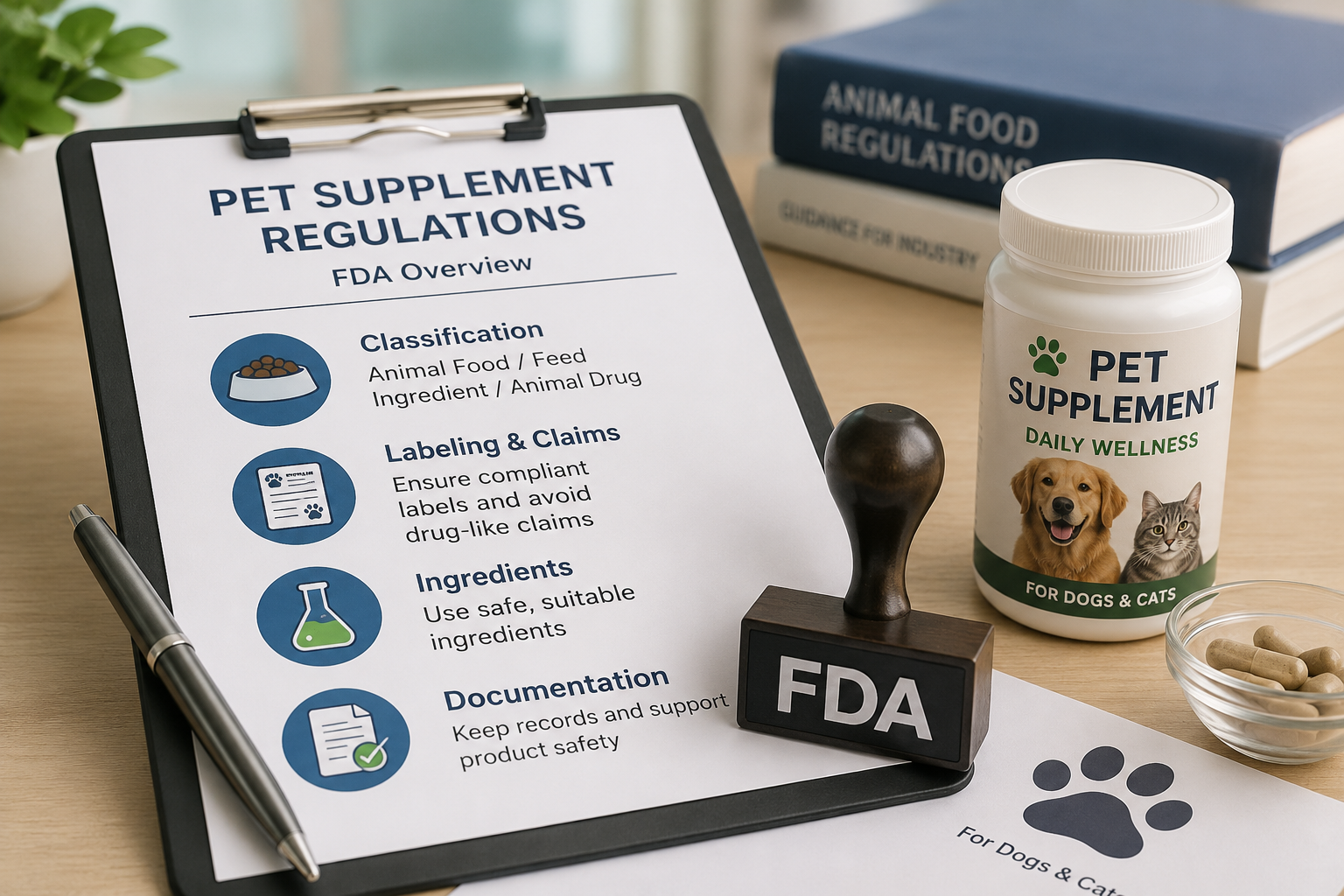
A private label joint support product can look simple at first: choose a glucosamine chew, add a chicken flavor, and launch. The problem is that many brands follow the same path. That makes differentiation harder. I prefer to start with strategy, so the product fits the dog, the brand, and the supply chain.
The best private label joint support product is not one universal glucosamine chew. It is a product strategy matched to the target dog group, formula structure, dosage form, price point, packaging plan, and manufacturing reality. Glucosamine can still be useful[^1], but it should not be the only decision driver.
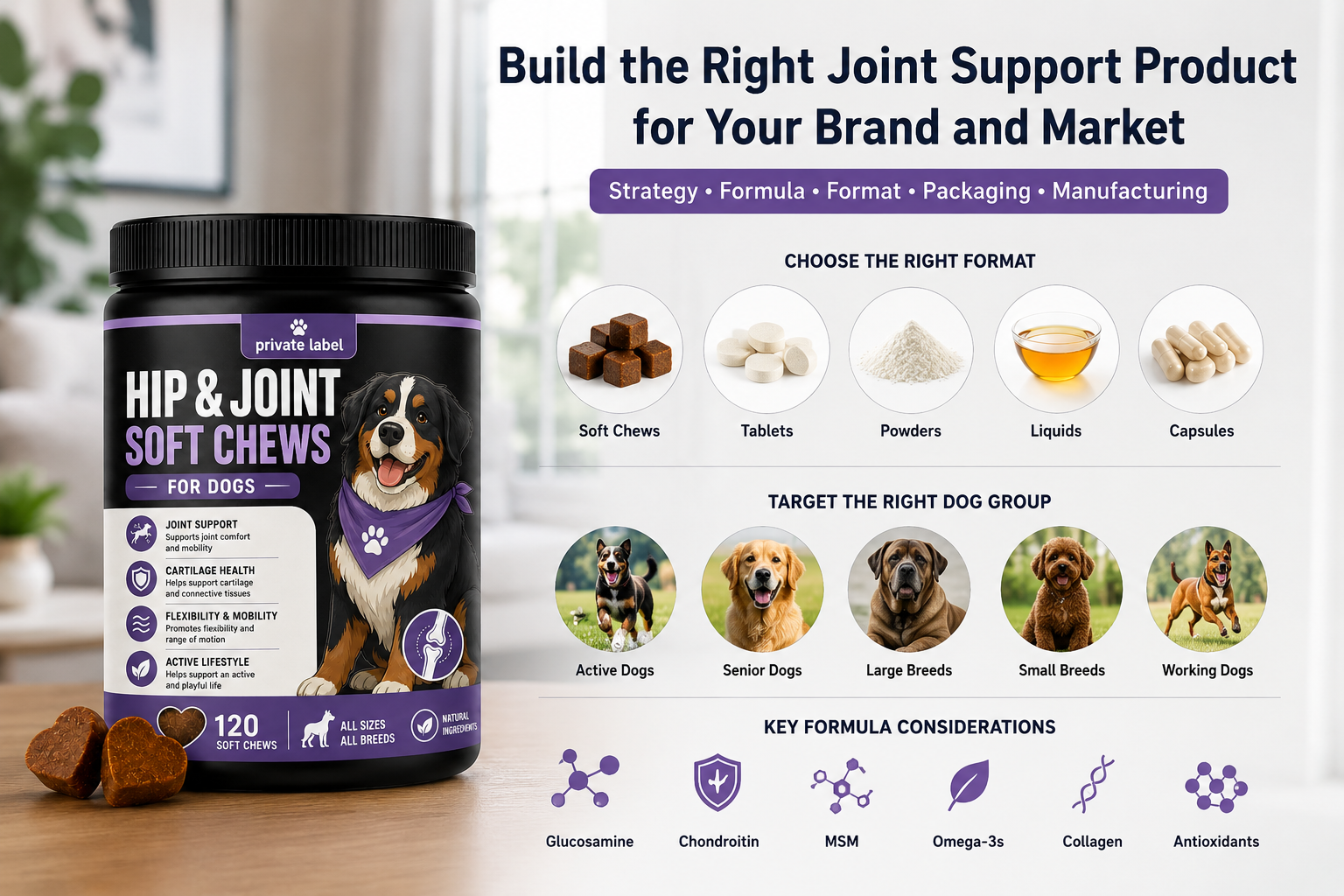
In our private label and OEM development conversations at Feelshine Healthcare, I often see buyers ask for “the best joint chew.” That is a fair starting point. But the stronger question is more specific: Which joint support product should this brand launch for this dog group and this market?
What Makes the Best Private Label Joint Support Product Different?
Many buyers start with a familiar problem. They see glucosamine chews everywhere, so they worry about launching another product that looks the same. That concern is valid. If the formula, format, flavor, count, and label story are all generic, the product has little room to stand out.
The best private label joint support product is different because it connects the user need, ingredient direction, dosage form, serving plan, packaging size, and supply plan. It does not depend only on one popular ingredient. It gives the brand a clear reason to exist in a crowded dog supplement category.
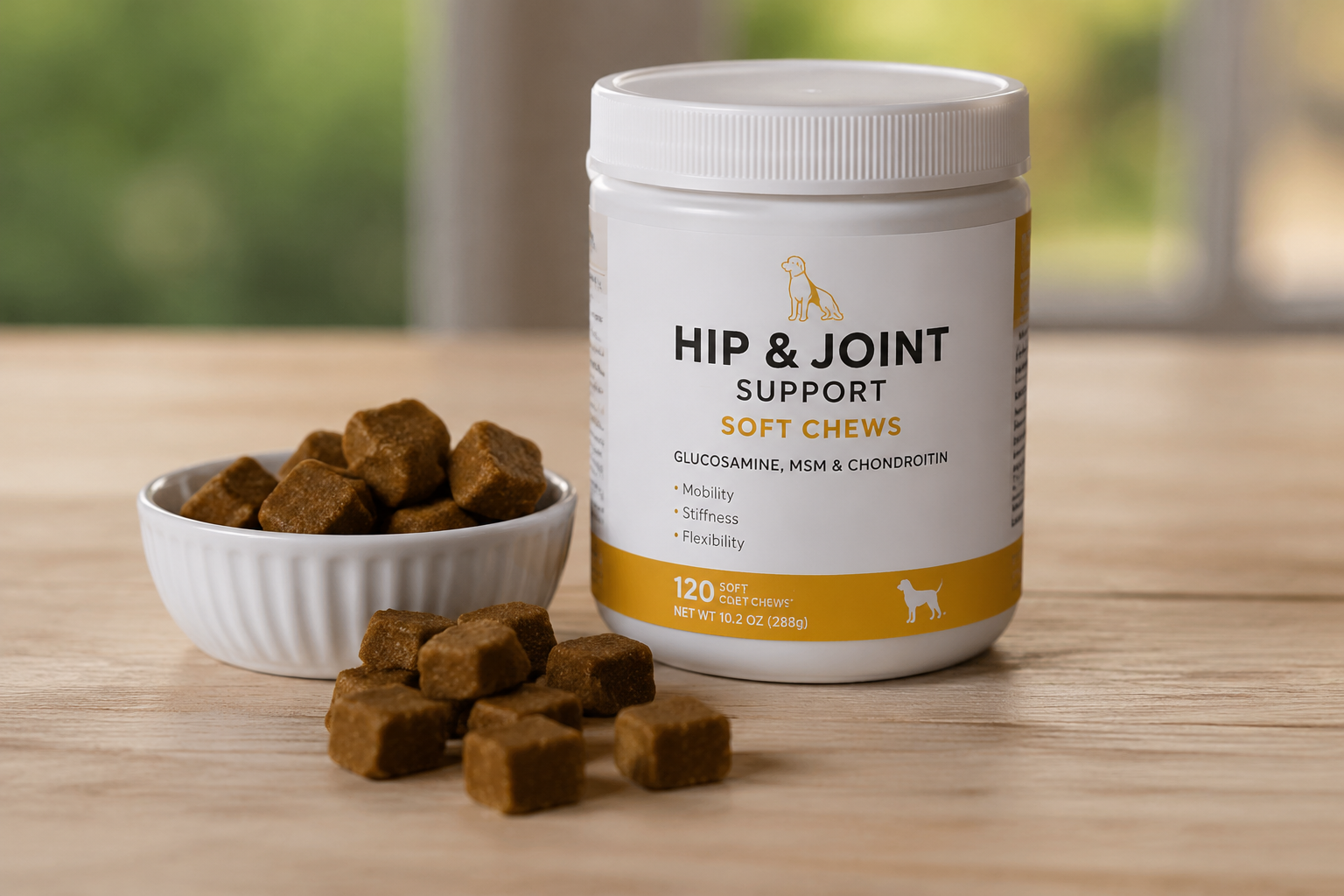
I Start With the Dog, Not the Ingredient
When I discuss joint support product development with pet supplement brands, I usually ask about the dog group before I ask about the ingredient list. This small change improves the product conversation quickly.
A dog joint support line may target:
- Senior dogs that need daily mobility support
- Large-breed dogs that need a more serious positioning
- Active dogs that need performance-style support
- Adult maintenance users that need a lower-barrier daily product
- Sensitive feeding scenarios where texture, flavor, or allergens matter
- Multi-pet households where convenience and value matter
Each group can lead to a different formula and format. A senior dog product may need a softer texture and easy feeding. A large-breed product may need larger serving sizes and clear cost planning. An active dog product may need a more premium positioning with ingredients such as Omega-3[^2], collagen[^3], or MSM[^4], depending on market strategy and regulatory review.
Glucosamine Chews Are Useful, But They Are Often Too Generic
I do not view glucosamine chews as a bad choice. They are familiar to consumers, easy to explain, and well established in the pet supplement aisle. However, I do see a problem when brands treat “glucosamine chew” as the full product strategy.
A more deliberate formula structure may combine several joint-support nutrients, such as:
| Formula Direction | Possible Ingredient Types | Common Positioning Use |
|---|---|---|
| Basic daily support | Glucosamine, MSM | Entry-level or maintenance product |
| Classic joint complex | Glucosamine, chondroitin, MSM | Mainstream mobility support |
| Premium mobility blend | Glucosamine, MSM, collagen, Omega-3 | Higher-value positioning |
| Senior dog support | Joint nutrients plus selected wellness ingredients | Aging dog product line |
| Sensitive format strategy | Fewer ingredients, simple flavor system | Dogs with selective feeding needs |
The exact formula should depend on local regulations, label rules, target species, serving size, and market positioning. I always recommend that buyers review ingredient permissions and claims with qualified regulatory or veterinary professionals for their destination market.
The “Best” Product Has a Commercial Reason to Survive
A formula can look excellent on paper and still fail as a private label product. I have seen buyers get excited about a high-loaded formula, then later realize that the serving size, cost, chew size, packaging count, or MOQ does not fit their launch plan.
A sustainable private label joint support product should answer practical questions:
- Can the active and functional ingredients fit into the chosen dosage form?
- Can the dog reasonably consume the serving size?
- Can the product meet the target cost per bottle, pouch, or jar?
- Can raw materials be sourced consistently?
- Can the packaging size support a 30-day, 45-day, or 60-day use period?
- Can the brand reorder without long disruptions?
- Can the label claims be supported and reviewed for the target market?
That is why I see the best products as a balance between consumer appeal, manufacturing feasibility, and procurement control. The winning product is not always the most complex formula. It is the product that a brand can launch clearly, produce consistently, and reorder with confidence.
Which Dogs Should a Private Label Joint Support Product Serve?
A common mistake is trying to serve every dog with one product. That seems efficient at first. But it often creates a weak product story. If the product is for all dogs, all ages, all sizes, and all needs, the brand may struggle to explain why consumers should choose it.
A private label joint support product should serve a defined dog group, such as senior dogs, large breeds, active dogs, or daily maintenance users. This target decision shapes the formula, dosage form, flavor, serving size, package count, price point, and marketing language. Clear targeting reduces product development risk.
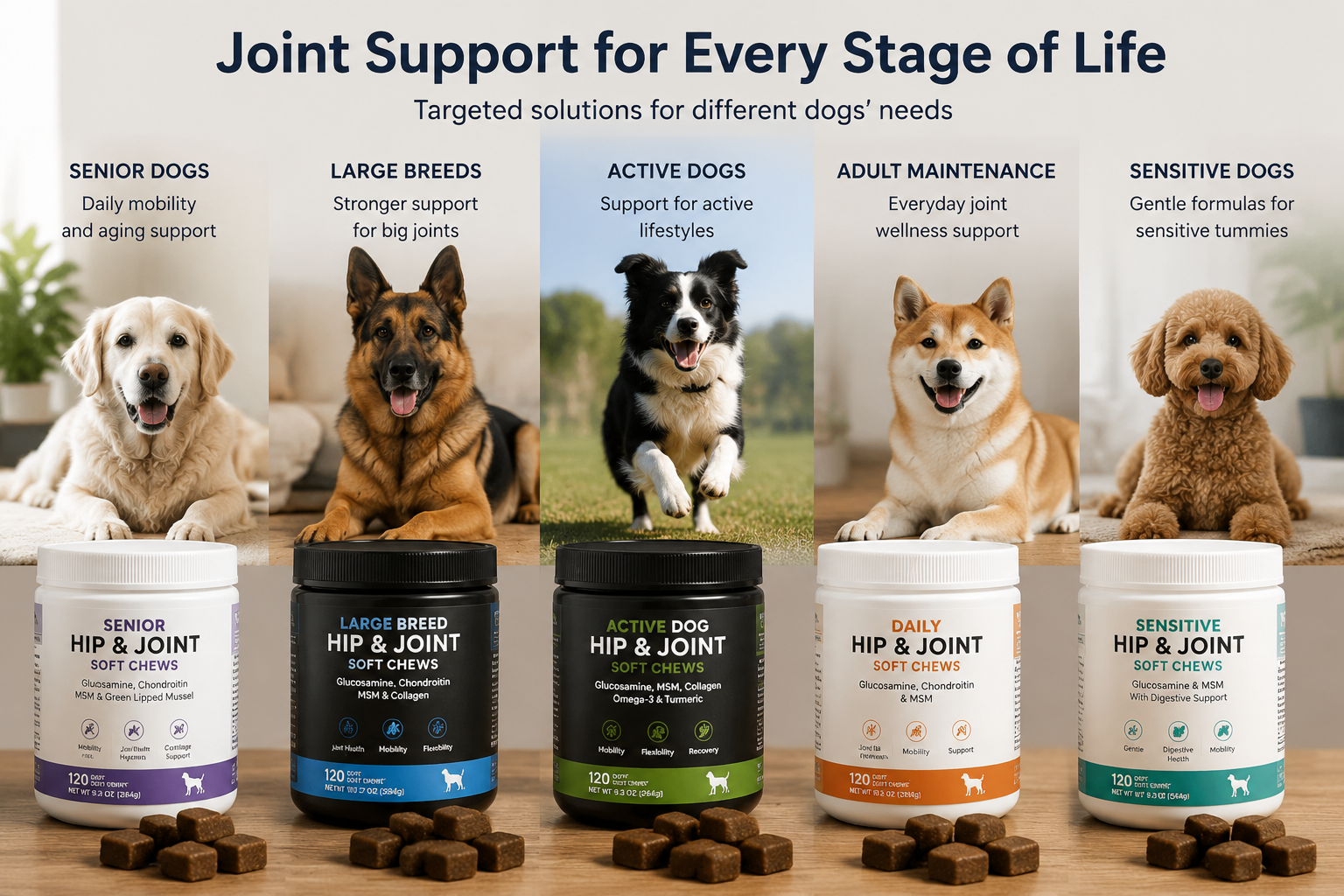
Target Dog Group Drives the Whole Product Brief
I like to treat the target dog group as the first page of the product brief. This helps the buyer, manufacturer, packaging team, and compliance reviewer work from the same logic.
Here is a practical way to compare target groups:
| Target Dog Group | Product Goal | Development Focus | Common Risk |
|---|---|---|---|
| Senior dogs | Daily mobility and aging support | Soft texture, easy feeding, clear serving plan | Overcomplicated formula |
| Large breeds | Stronger value and higher serving needs | Cost per serving, package count, chew size | Formula becomes too expensive |
| Active dogs | Performance-style positioning | Premium blend, clean label story | Claims become too aggressive |
| Adult maintenance | Everyday joint wellness support | Simple formula, attractive price | Product looks generic |
| Sensitive dogs | Gentle feeding experience | Flavor, texture, ingredient simplicity | Palatability issues |
This table is not a medical guide. It is a product development tool. Brand owners should use it to organize commercial decisions before final formulation.
Senior Dogs Need Convenience and Trust
For senior dogs, I usually pay close attention to texture and feeding convenience. A very hard tablet may not match the expectations of some senior dog owners. A soft chew, powder, liquid, or paste may feel easier, depending on the market and the dog’s feeding habits.
The product story should also feel calm and trustworthy. Senior dog owners often want a daily routine, not a complicated “maximum strength” message. A clear serving guide, reasonable count size, and familiar functional ingredients can support confidence.
Useful development questions include:
- Will the product be used every day?
- Will the serving size change by dog weight?
- Will the chew texture stay stable during shelf life?
- Will the flavor remain acceptable after storage and shipping?
- Will the packaging protect the product from moisture or oxidation?
Large-Breed Products Need Cost Discipline
Large-breed joint support products can create a different challenge. Larger dogs often need higher serving amounts. That affects ingredient cost, packaging count, shipping weight, and retail price.
For example, a formula that looks affordable for a small dog may become expensive when the serving size doubles or triples for a large dog. If the brand wants a 30-day supply, the package may need more units or larger net weight. This affects MOQ, carton size, freight cost, and warehouse planning.
I recommend that buyers calculate cost per day, not only cost per unit. This gives a clearer view of commercial fit.
A simple internal review may include:
- Formula cost per kg or per batch
- Unit weight per chew, tablet, or scoop
- Daily serving by dog weight
- Total units or grams per package
- Target wholesale price
- Target retail margin
- Freight and duty assumptions
- Reorder timing and inventory plan
This kind of review may feel less exciting than ingredient selection, but it protects the product launch. A strong private label joint support product must work for the dog owner and the brand’s supply chain at the same time.
Active Dog Products Need Careful Positioning
Active dog formulas can be appealing because they allow a more premium story. However, I prefer careful language here. A pet supplement brand should avoid implying that the product treats injury or replaces veterinary care[^5]. Instead, the product can focus on supporting normal joint function, mobility routines, and active lifestyles, subject to local claim rules.
This is where regulatory review matters. Different markets have different expectations for ingredient use, pet supplement claims, and label wording.[^6] For export projects, I always tell buyers to verify requirements in the destination market before printing packaging.
Are Glucosamine Chews Still the Right Format?
Soft chews are popular because dog owners like convenience[^7]. The problem is that popularity can create sameness. If every competitor uses the same chew shape, flavor, jar count, and formula style, a new product may blend in quickly. Format choice deserves more attention.
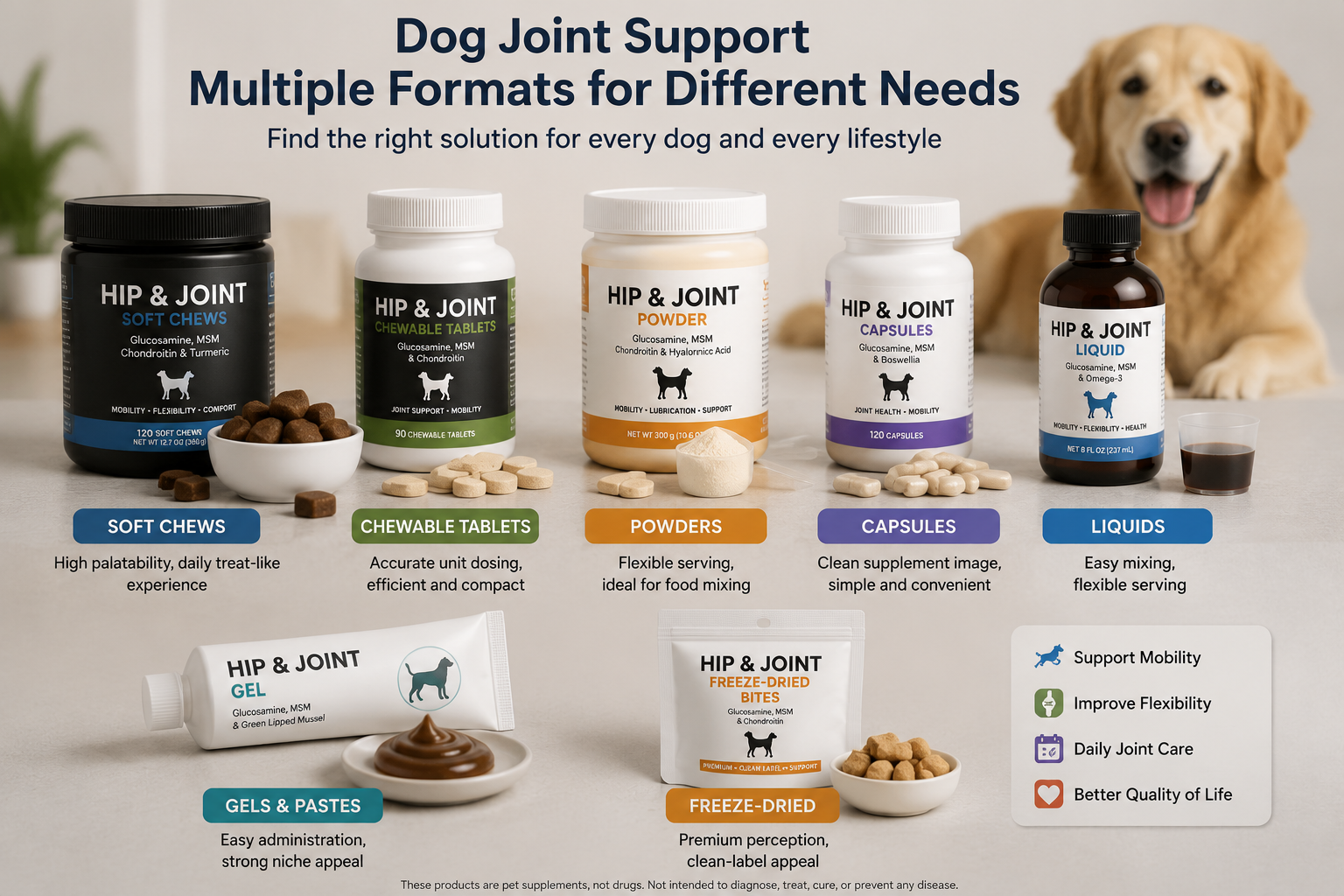
Glucosamine chews can still be the right format when palatability, daily feeding, and consumer familiarity matter. However, soft chews are not always the best answer. Tablets, powders, capsules, liquids, gels, and freeze-dried formats may fit different price points, feeding routines, markets, and brand positions.
Dosage Form Is a Product Strategy Decision
I see dosage form as one of the most important decisions in a private label joint support product. It affects how the consumer understands value and how the manufacturer controls production.
Here is a practical comparison:
| Dosage Form | Strengths | Buyer Considerations |
|---|---|---|
| Soft chews | High convenience, treat-like experience, strong retail appeal | Palatability, moisture control[^8], texture stability |
| Chewable tablets | Accurate unit dosing, efficient production, compact packaging | Hardness, acceptance, flavor masking |
| Powders | Flexible serving, good for food mixing, suitable for larger dogs | Scoop accuracy, caking risk, flavor impact |
| Capsules | Clean supplement image, simple packaging | Feeding difficulty for some dogs |
| Liquids | Easy mixing, flexible serving | Preservative system, leakage risk, shipping weight |
| Gels and pastes | Easy administration, strong niche appeal | Tube compatibility, texture stability |
| Freeze-dried supplements | Premium perception, clean-label appeal | Cost, MOQ, moisture control |
No format is universally best. The right format depends on the target dog, owner behavior, formula load, price point, and channel.
Soft Chews Work Well When the Product Needs Daily Habit
Soft chews remain a strong private label option because they feel familiar. Many dog owners already understand the idea of giving a daily chew. This makes it easier for e-commerce sellers and pet retailers to explain the product.
However, soft chews require careful development. The formulation team must balance functional ingredients, palatability agents, texture systems, moisture, processing, and packaging. If the chew becomes too dry, too sticky, too large, or too strongly scented, repeat purchase may suffer.
A buyer should ask the manufacturer about:
- Target chew weight and shape
- Flavor options and palatability direction
- Texture expectations over shelf life
- Moisture-sensitive ingredients
- Packaging barrier requirements
- Production lead time and sample timing
- Minimum order quantity for each flavor or shape
At Feelshine Healthcare, we support private label buyers through sampling and dosage form discussion. I always view sampling as a decision stage, not a formality. A sample helps the buyer evaluate texture, smell, appearance, unit size, and packaging direction before moving into commercial production.
Powders and Liquids Can Solve Serving Size Problems
For larger dogs, powders and liquids may offer practical advantages. A high-serving chew product can become bulky. A powder can allow flexible serving by scoop. A liquid can be mixed with food and may support easy feeding in some households.
But these formats also bring their own risks. Powders may clump if packaging protection is weak[^9]. Liquids may increase shipping weight and require careful bottle and cap selection. Both need clear serving instructions.
A powder or liquid may be a better fit when:
- The formula requires a larger daily amount
- The brand wants a value-size product
- The target dog group includes large breeds
- The consumer is comfortable mixing supplements with food
- The channel can handle heavier or larger packaging
Tablets and Capsules Can Fit Cost-Controlled Programs
Chewable tablets and capsules may fit brands that need more compact production and packaging. Tablets can offer accurate unit dosing and efficient logistics. Capsules can create a familiar supplement image for some buyers.
However, dog acceptance must be considered. Some dogs may resist tablets or capsules unless they are flavored, hidden in food, or paired with a feeding routine. This is why format choice should connect to real consumer behavior.
I do not recommend choosing a format only because it is cheaper. I recommend choosing a format because it supports the brand’s product promise, price point, and usage routine.
How Should Brands Structure a Private Label Joint Support Product Formula?
Formula development can become confusing when every ingredient sounds useful. The risk is that the buyer adds too many ingredients without a clear reason. This can increase cost, complicate production, and create label challenges without improving the product story.
A private label joint support product formula should have a clear structure: core joint-support ingredients, optional complementary nutrients, flavor and texture systems, and label-compliant positioning. The formula should match the target dog group, dosage form, serving size, regulatory market, and intended price level.
I Prefer Formula Architecture Over Ingredient Stacking
Ingredient stacking means adding more ingredients because they look attractive on the label. Formula architecture means each ingredient has a role. I prefer the second approach.
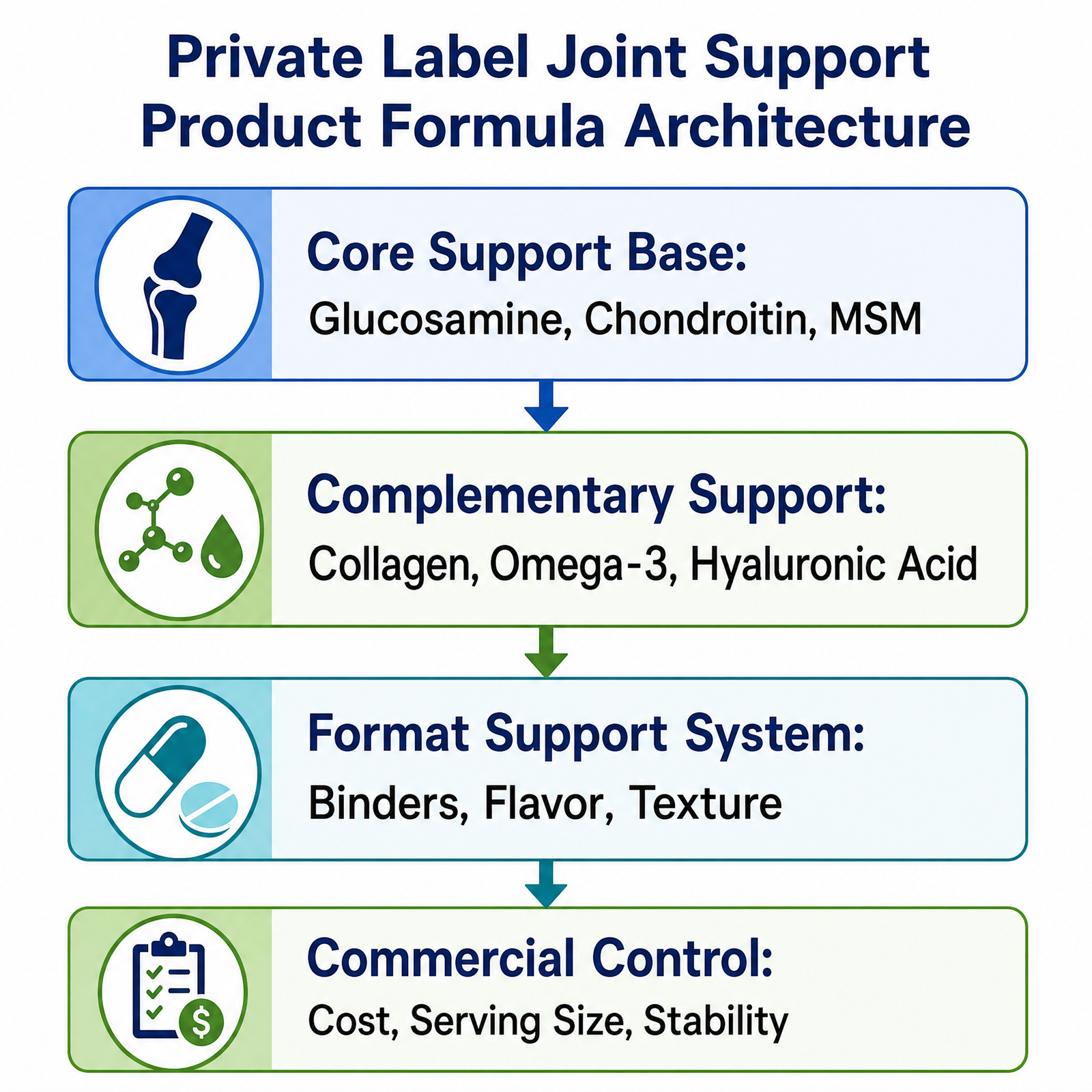
A simple formula architecture may look like this:
-
Core support base
This may include familiar joint-support nutrients such as glucosamine, chondroitin, or MSM, depending on the brand’s positioning and market requirements. -
Complementary support layer
This may include ingredients such as collagen, Omega-3 sources, hyaluronic acid, or selected botanicals, where permitted and commercially suitable. -
Format support system
This includes flavor, texture, binders, carriers, moisture control, or flow agents, depending on whether the product is a chew, tablet, powder, liquid, or gel. -
Commercial control layer
This includes cost target, serving size, package count, MOQ, ingredient stability, and reorder planning.
This structure helps prevent an unfocused formula.
The Label Story Must Match the Formula
A product label should not overpromise. In B2B development, I prefer a label story that is clear, supportable, and aligned with local regulations. The brand can highlight joint support, mobility support, active lifestyle support, or senior dog wellness, depending on the formula and claim review.
Buyers should avoid phrases that imply treatment, cure, reversal, or repair of disease. For application-specific claims, brands should consult qualified veterinary, legal, or regulatory professionals. This is especially important for international markets.
A responsible label review may include:
- Ingredient permission in the target market
- Pet supplement category classification
- Allowed structure or function wording
- Required warnings or feeding directions
- Species and life-stage suitability
- Country-of-origin and importer requirements
- Allergen or sensitivity considerations
- Net content and serving declaration
Formula Load Must Fit the Dosage Form
This is one of the most practical issues in manufacturing. A formula may look good in a spreadsheet, but the ingredients still need to fit into a chew, tablet, capsule, scoop, or liquid serving.
For example:
- A high-load soft chew may become too large or too dense.
- A tablet with many powders may become hard or less palatable.
- A powder with strong-smelling ingredients may need flavor balancing.
- A liquid formula may need solubility and suspension review.
- A capsule may limit the total amount per serving.
This is why early technical discussion matters. I often encourage buyers to share the target claim, desired ingredients, serving count, and price range before locking the formula. With that information, a manufacturer can comment on feasibility and suggest a better development route.
Ingredient Stability and Supply Matter
The best-looking formula can still create problems if raw materials are unstable, expensive, or difficult to source consistently. Private label brands should ask about ingredient qualification, supplier verification, batch traceability, and expected lead times.
At Feelshine Healthcare, our quality management process includes raw material qualification, supplier verification, in-house quality control, and finished product testing procedures. Buyers should still verify relevant documentation, such as specifications, certificates of analysis, GMP-related documents, and test reports, as part of their supplier qualification process.
For procurement teams, I suggest asking:
- Can the supplier provide ingredient specifications?
- Can the supplier provide batch-level documentation?
- Are alternative raw material sources available?
- Are there seasonal supply risks?
- Can the formula be scaled from sample to commercial batch?
- What tests are performed before release?
- How is traceability maintained?
A strong private label joint support product depends on this quiet back-end work. The consumer may only see the front label, but procurement risk lives behind the label.
What Supply Chain Factors Decide Launch Success?
Some products fail before they reach the market because the launch plan is unrealistic. The buyer may choose a premium formula, custom packaging, and multiple flavors, but the MOQ, budget, lead time, and logistics plan do not support that ambition. This creates delays and extra cost.
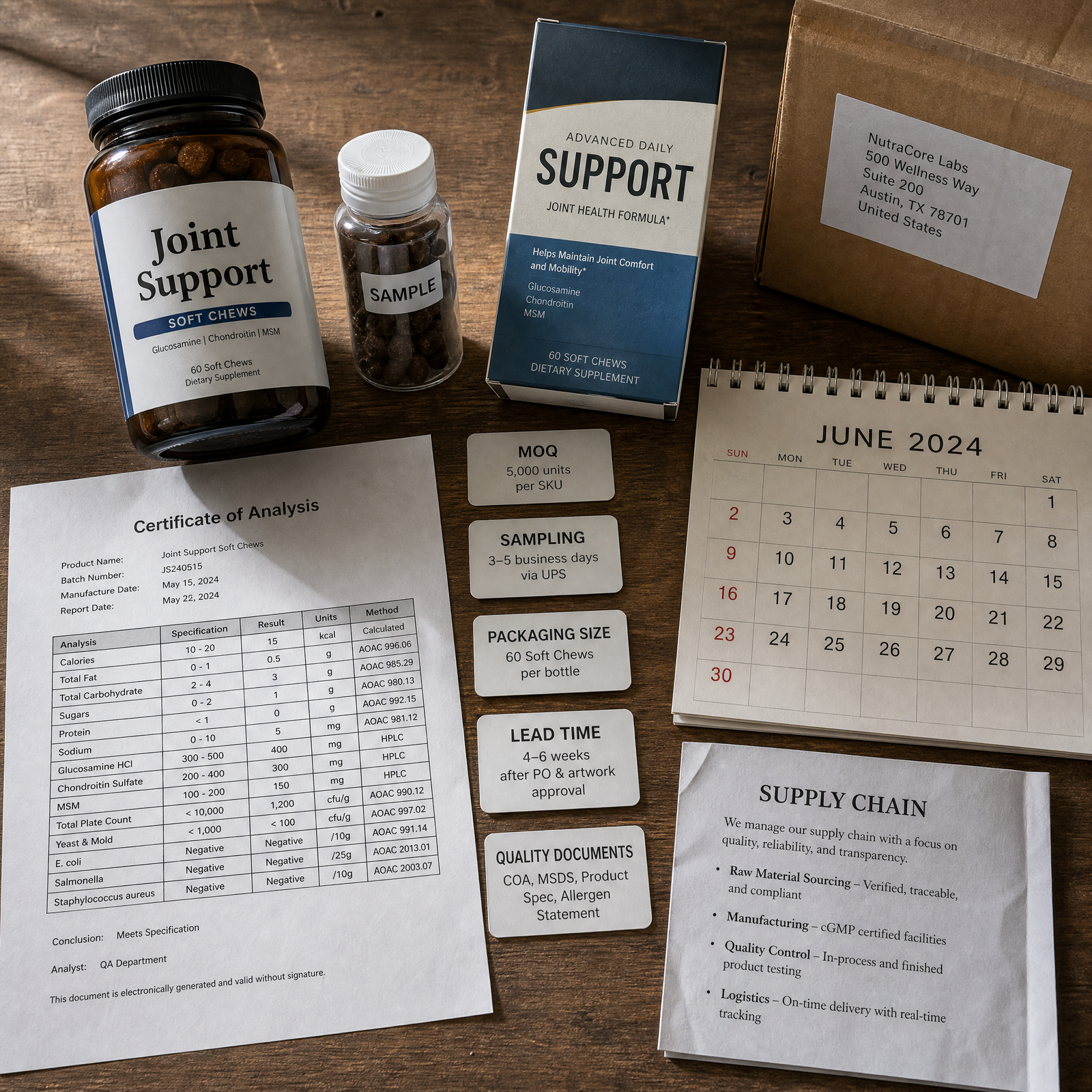
Supply chain factors that decide launch success include MOQ, sample approval, raw material availability, production lead time, packaging readiness, cost structure, quality documentation, shipping plan, and reorder timing. A commercially strong private label joint support product must be easy enough to launch and stable enough to reorder.
MOQ Should Match the Brand’s Real Stage
MOQ is not only a factory number. It is a risk-management number. A new e-commerce seller, a regional distributor, and a chain retailer may need very different launch quantities.
At Feelshine Healthcare, we support flexible production programs and low MOQ discussions where feasible. But I always encourage buyers to be realistic. A very low MOQ may limit customization options. A higher MOQ may improve unit cost but increase inventory pressure.
A practical MOQ review should consider:
| Buyer Situation | Better Launch Approach | Main Risk to Control |
|---|---|---|
| New brand testing market demand | Existing base formula with packaging customization | Overinvesting too early |
| Growing e-commerce brand | Semi-custom formula and strong label design | Stockout during growth |
| Distributor expanding category | Multiple SKUs with controlled complexity | Too many slow-moving products |
| Established brand | Custom formula and dedicated packaging | Longer development timeline |
MOQ should serve the business model, not just the lowest possible purchase.
Sampling Is a Procurement Control Step
I believe sampling should be treated as a structured review. A buyer should not approve a sample only because it “looks good.” The sample should be checked against the product brief.
A useful sample evaluation checklist includes:
- Appearance
- Color consistency
- Odor
- Texture or hardness
- Unit weight
- Flavor direction
- Feeding convenience
- Packaging compatibility
- Label claim alignment
- Cost and MOQ confirmation
- Estimated lead time
- Documentation availability
For soft chews, I pay special attention to texture and moisture feel. For powders, I look at flow, smell, and mixing behavior. For liquids, I look at viscosity, bottle compatibility, and leakage risk. These details sound basic, but they can affect repeat purchase and customer complaints.
Packaging Size Affects Perceived Value
Packaging is not just decoration. It controls shelf appeal, cost, freight, and usage period. A joint support product may be sold as 30-count, 60-count, 90-count, or weight-based packaging. Each choice changes the consumer’s perception of value.
A 30-day supply may feel simple and affordable. A 90-count product may create stronger value but higher upfront price. A large pouch may fit powders better. A jar may fit chews. A bottle may fit tablets or capsules.
Brands should calculate:
- Daily serving by dog size
- Number of days per package
- Packaging material cost
- Shipping weight and volume
- Retail shelf or e-commerce image impact
- Label space for feeding directions
- Storage and resealing performance
Lead Time Needs a Real Calendar
Typical production lead times can vary based on formula complexity, packaging readiness, raw material availability, and order size. In our business context, many projects fall into a general range of 20–45 days, but buyers should confirm timing for each specific project.
A realistic launch calendar may include:
- Formula discussion
- Sample development
- Sample shipping and review
- Formula adjustment
- Packaging design
- Label compliance review
- Deposit and order confirmation
- Raw material preparation
- Production
- Finished product testing
- Export documentation
- International shipping
- Customs clearance
- Warehouse receiving
- Market launch
This calendar protects the brand from rushed decisions. It also helps procurement teams align marketing, inventory, and cash flow.
Quality Documents Should Be Verified
A responsible buyer should ask for relevant quality and compliance documents before placing a major order. A manufacturer may describe GMP-compliant production, traceability, testing, and supplier verification[^10]. The buyer should verify documents and confirm that they fit the destination market’s expectations.
Common documents may include:
- Business license or registration documents
- GMP-related facility documents, where applicable
- Product specification
- Ingredient specification
- Certificate of analysis
- Finished product test report
- Packaging specification
- Batch production record summary, where available
- Export or shipping documents
Frequently Asked Questions
Is glucosamine still worth using in a private label dog joint supplement?
Yes, glucosamine can still be part of a private label dog joint supplement because it is familiar and widely used in joint support positioning. However, I do not recommend treating it as the full strategy. The formula should match the target dog group, dosage form, serving size, and market rules.
What is the best dosage form for a dog joint support product?
There is no single best dosage form. Soft chews work well for convenience and daily routines. Powders may fit large dogs or value-size products. Tablets and capsules can support compact packaging. Liquids and gels may fit special feeding preferences. The best choice depends on the brand strategy.
How can I make my private label joint support product less generic?
You can make it less generic by defining a specific target dog group, choosing a deliberate formula structure, selecting a dosage form that supports the use case, and designing packaging around a clear usage period. You should also review MOQ, cost, claims, and supply stability early.
What should I ask a manufacturer before launching a joint support product?
You should ask about formula feasibility, dosage form options, MOQ, sampling timeline, raw material sourcing, quality control, finished product testing, packaging choices, lead time, and export support. You should also request relevant documents and verify compliance needs for your target market.
Can Feelshine Healthcare help with custom dog joint supplement development?
Yes. We support private label, OEM, and ODM pet supplement projects, including formula discussion, dosage form selection, sampling, packaging, quality control, and international shipping support. Buyers should share their target market, dog group, preferred format, price range, and launch timeline for a practical evaluation.
Conclusion
The best private label joint support product is not automatically the strongest glucosamine chew or the longest ingredient list. It is the product that fits the dog group, brand position, dosage form, formula structure, cost target, packaging plan, and supply chain reality. I recommend starting with a clear product brief before choosing ingredients. If you are planning a dog joint support line, Feelshine Healthcare can help you evaluate private label, OEM, and custom formulation options for a practical launch.
[^1]: "A 2022 Systematic Review and Meta-Analysis of Enriched ... - PMC", https://pmc.ncbi.nlm.nih.gov/articles/PMC9499673/. Peer-reviewed reviews of canine osteoarthritis nutraceuticals describe glucosamine, often in combination with chondroitin, as a commonly studied ingredient for mobility-related outcomes in dogs, while noting that clinical effects are variable across studies. Evidence role: general_support; source type: paper. Supports: Peer-reviewed veterinary literature has evaluated glucosamine, often with chondroitin, for canine osteoarthritis or mobility-related outcomes.. Scope note: This supports potential utility and category relevance, not proof that any specific private label glucosamine product is effective. [^2]: "The Effects of Omega-3 Supplementation on the ... - PMC", https://pmc.ncbi.nlm.nih.gov/articles/PMC11545626/. Clinical and review literature on canine osteoarthritis reports that EPA and DHA omega-3 fatty acids have been studied for effects on inflammatory mediators and mobility-related outcomes in affected dogs. Evidence role: mechanism; source type: paper. Supports: Studies and reviews discuss EPA and DHA omega-3 fatty acids in relation to inflammatory pathways and clinical outcomes in dogs with osteoarthritis.. Scope note: This supports the scientific rationale for omega-3 inclusion, not the performance of any specific formula or dose. [^3]: "Evaluation of the Effects of an Undenatured Collagen Type-2 ...", https://pmc.ncbi.nlm.nih.gov/articles/PMC10812682/. Peer-reviewed canine studies have examined collagen-based ingredients, including undenatured type II collagen or collagen peptides, for osteoarthritis signs and mobility-related measures. Evidence role: general_support; source type: paper. Supports: Peer-reviewed studies have evaluated collagen-based ingredients for canine osteoarthritis or mobility-related endpoints.. Scope note: This supports collagen as an evidence-informed ingredient category, not a conclusion that all collagen sources or doses are equivalent. [^4]: "Study of the effectiveness of glucosamine and chondroitin ...", https://pmc.ncbi.nlm.nih.gov/articles/PMC9929184/. Published nutraceutical literature describes methylsulfonylmethane as an ingredient studied for joint-related outcomes, including in companion-animal or osteoarthritis contexts. Evidence role: general_support; source type: paper. Supports: Veterinary or comparative literature has discussed methylsulfonylmethane as a nutraceutical ingredient for joint health or osteoarthritis support.. Scope note: The evidence base for MSM in dogs is less extensive than for some other interventions, so the citation would support plausibility rather than strong clinical certainty. [^5]: "Animal Foods & Feeds", https://www.fda.gov/animal-veterinary/products/animal-foods-feeds. FDA Center for Veterinary Medicine materials state that animal products making disease treatment or prevention claims may fall under animal drug regulation rather than ordinary feed or supplement labeling. Evidence role: expert_consensus; source type: government. Supports: Government guidance explains that products claiming to diagnose, cure, mitigate, treat, or prevent disease in animals may be regulated as drugs.. Scope note: This is strongest for the United States; other jurisdictions may classify pet supplements and claims differently. [^6]: "Animal Food Labeling and Pet Food Claims", https://www.fda.gov/animal-veterinary/animal-foods-feeds/animal-food-labeling-and-pet-food-claims. Government feed and animal-product regulatory materials show that ingredient authorization, product classification, and permissible label claims differ across jurisdictions. Evidence role: general_support; source type: government. Supports: Official regulatory materials show that animal feed, supplement, ingredient, and claim rules are jurisdiction-specific.. Scope note: A single source may only document one jurisdiction, so comparative support may require citations to multiple official frameworks. [^7]: "Using social media listening to identify the real-world ... - PMC", https://pmc.ncbi.nlm.nih.gov/articles/PMC12258389/. Studies of veterinary medication adherence and palatable oral formulations report that ease of administration and animal acceptance influence owner compliance in dogs. Evidence role: general_support; source type: paper. Supports: Veterinary adherence and palatability research links ease of administration and palatable formats with owner compliance in dogs.. Scope note: This is contextual support for chew-format convenience; it may not directly measure private label joint supplement purchasing behavior. [^8]: "Changes in water activity and some microbial groups during storage of ...", https://pubmed.ncbi.nlm.nih.gov/9330664/. Food science studies on water activity and intermediate-moisture products show that moisture control affects microbial stability, texture, and shelf-life performance. Evidence role: mechanism; source type: paper. Supports: Food science literature explains how moisture content and water activity affect texture, microbial stability, oxidation, and shelf life.. Scope note: This supports the technical importance of moisture control generally; product-specific stability still requires formulation and packaging testing. [^9]: "A Comprehensive Review of the Rehydration of Instant Powders - PMC", https://pmc.ncbi.nlm.nih.gov/articles/PMC12385211/. Food powder research describes moisture sorption and humidity exposure as key mechanisms causing caking, clumping, and loss of flowability in powdered products. Evidence role: mechanism; source type: paper. Supports: Food powder literature explains that moisture sorption and humidity exposure can lead to caking, clumping, or reduced flowability.. Scope note: This supports the general mechanism; the degree of clumping depends on the specific powder composition and packaging barrier. [^10]: "21 CFR Part 507 -- Current Good Manufacturing Practice, Hazard ...", https://www.ecfr.gov/current/title-21/chapter-I/subchapter-E/part-507. FDA animal food current good manufacturing practice and preventive-control materials describe manufacturing controls, records, supply-chain verification, and related quality-system activities. Evidence role: general_support; source type: government. Supports: Official animal food safety rules and guidance describe manufacturing controls, records, supply-chain programs, and verification activities.. Scope note: Applicability depends on product classification, jurisdiction, and facility obligations; the citation supports the quality-control framework rather than certifying any named manufacturer.